Table of Contents
Introduction: What Does SOC Analyst Mean?
SOC Analyst is a term that has probably appeared in your searches if you are scouting career opportunities in cyber security. You’re in the right place. I will explain everything you need to know in the most straightforward way possible, including how a SOC Analyst functions and how to become one.
- What is a SOC Analyst?
- What is the SOC Analyst full form?
- What do SOC Analysts do?
- Is it worth pursuing this career?
What is the SOC Analyst Full Form?
SOC Analyst is a short term standing for:
Security Operations Center Analyst
Let’s deconstruct this further.
- Security → Protection of systems and data
- Operations Center (SOC) → A team, or a place, where security is monitored
- Analyst → A person who studies and counters threats
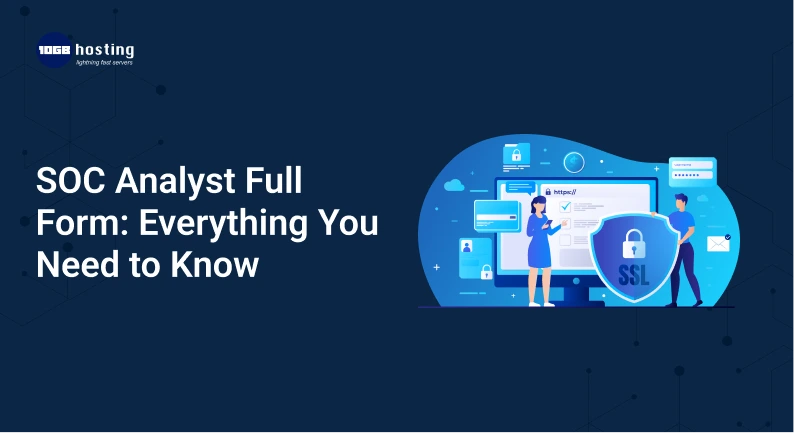
Putting all together, a SOC Analyst is a person who monitors, detects, and responds to cyber threats in real time.
What is SOC Full Form in Cyber Security?
To further the description of a SOC Analyst:
Security Operations Center, is the full term for SOC in cyber security.
This one center houses a team of professionals in cyber security, and from this center, they:
- Monitor systems and networks
- Detect abnormal activities
- Neutralize cyber threats.
- Consider this center as a security control room that is operational 24/7 for the digital systems of the company.
What are the responsibilities of a SOC Analyst?
It is the duty of a SOC Analyst to monitor systems and proactively defend against threats and potential damages.
Here are details specific to the job:
1. Security Alert Monitoring
Using advanced technology, they are able to see:
- Malformed logins
- Malware exposure
- Threats to the system
2. Threat Research
For them to do thorough research, the anomalies detected are:
- Evaluated
- Scrutinized across multiple logs
- Decide upon the existence of an actual threat
3. Incident Response
In case of an attack, they are the first responders:
- Inferring the attack by blocking the harmful IPs involved
- Quarantining the affected systems
- Updating the rest of the team
4. Security Tools Management
They manage to work on:
- Integration of Security Information and Event Management (SIEM)
- Firewalls
- Antivirus programs
5. Report Generation
They record:
- The event chronologically
- The response to the event
- Preventive measures for similar future incidents
Career Path of SOC Analysts
SOC analysts experience promotion through levels. These are the levels:
Level 1 (L1) – Novice
- Monitoring alerts
- Adhering to standard operating procedures
- Escalating problems
Level 2 (L2) – Advanced
- Deeper investigations
- Incident management
- Threat analysis
Level 3 (L3) – Pro
- Primary lead for investigations
- Coming up against complex attacks
- Evolving the security setup
How to Become a SOC Analyst, Step by Step
If you want to become a SOC Analyst, follow the guideline below:
Step 1: Master the Basic IT Skills
Commence with:
- Network foundations
- Operating systems (Windows and Linux)
- Cybersecurity concepts
Step 2: Learn the Basics of Cybersecurity
Familiarize yourself with:
- Malware
- Phishing
- Firewalls
- Encryption
Step 3: Get Certified
Getting certified is crucial and recommended to begin with the following:
- CompTIA Security+
- CEH (Certified Ethical Hacker)
- Google Cybersecurity Certificate
Step 4: Tools Familiarization
Use the following among others:
- SIEM systems
- Wireshark
- Splunk
Theoretical knowledge is one thing, hands-on experience is another.
Step 5: Submit Applications to Beginning Roles
Consider applying for:
- SOC Analyst (L1)
- Security Analyst
- IT Support with security responsibilities
Example: What SOC Analysts Deal With
Consider a hypothetical company that has reported suspicious login attempts that occurred at midnight.
What do they do?
- The SOC system registers the activity
- The SOC analyst examines the login history
- They discover a foreign location with many failed attempts
- They remove access to that IP
- They notify the relevant parties
Problem dealt with without any damage occurring.
This is the daily business protection SOC analysts provide.
The Significance of SOC Analysts
There is a steady rise in cyber attacks, and thus, the significance of SOC analysts has grown.
SOC analysts are vital because they do the following:
Safeguard Sensitive Information
They stop hacking attempts and data leaks.
Prevent Revenue Loss
A single cyber attack can cost companies millions, and SOC analysts help avoid that.
Continuous Safety
SOC teams are tasked with keeping systems secured, and thus, they work 24/7.
Evolving Career
The need for SOC analysts is constant and the cyber security sector is rapidly growing.
What it Takes to be a SOC Analyst
It takes a specific set of skills.
Technical Skills:
- Networking
- Proficient with security tools
- Log analysis
Soft Skills:
- Problem Solving
- Attention to Detail
- Timely Decision making
Why be a SOC Analyst?
1. Demand
With the rise of cyber attacks, companies need security experts.
2. Pay
Even entry-level employees get paid well.
3. Expanded Career Opportunities
You can rise to positions such as:
- Threat Hunter
- Cybersecurity Manager
- Security Engineer
4. Career Stability
Cybersecurity is here to stay.
Typical Difficulties SOC Analysts Need to Overcome
No job is without difficulties. Here are some common ones:
- Working night shifts
- High-pressure situations during attacks
- Learning new information continuously
If you are good at problem solving then it is definitely worth it.
FAQ – SOC Analyst Full Form
1. What is SOC Analyst full form?
SOC Analyst means Security Operations Center Analyst.
2. What is SOC full form in cyber security?
SOC in cyber security means Security Operations Center.
3. Is SOC Analyst a good career?
Yes, it is a good career with a lot of demand and good pay and growth.
4. What skills are needed for a SOC Analyst?
There is a need for basic IT and general cybersecurity skills, and problem solving.
5. Can beginners become SOC Analysts?
Yes, beginners, after getting some basic training and certification, can become Level 1 SOC Analysts.
Conclusion
You now know what SOC stands for, what the job entails and the importance of the job.
For those that are wanting to start a career in cybersecurity, consider this job. The right attitude and skills are more important than experience.
Call to Action
Do you want to start a career in cybersecurity?
- Start with the basics in networking and security
- Use tools and get hands on experience
- Get ready for your first role as a SOC Analyst
If you want more resources and guides like this, keep improving and engaging. Your career in cybersecurity can start now.