Table of Contents
Introduction: Ever Wondered What Really Keeps the Cloud Running?
When an app loads instantly, a website stays online during peak traffic, or your data syncs seamlessly across devices, we rarely stop to think about how it all works. We just expect it to. But behind every smooth digital experience lies a complex cloud infrastructure and at the heart of that infrastructure is something called a server node.
For businesses moving to the cloud, developers building scalable applications, or even beginners trying to understand cloud computing basics, one question often comes up:
Why is a server node in cloud computing so important today?
This blog answers that question in detail. We’ll break down what a server node is, how cloud computing server nodes work, why they matter more than ever, and how businesses can use them effectively. By the end, you’ll clearly understand why server nodes are the backbone of modern cloud computing and why ignoring them can limit performance, scalability, and reliability.
What Is a Server Node in Cloud Computing?
Simple Definition for Beginners
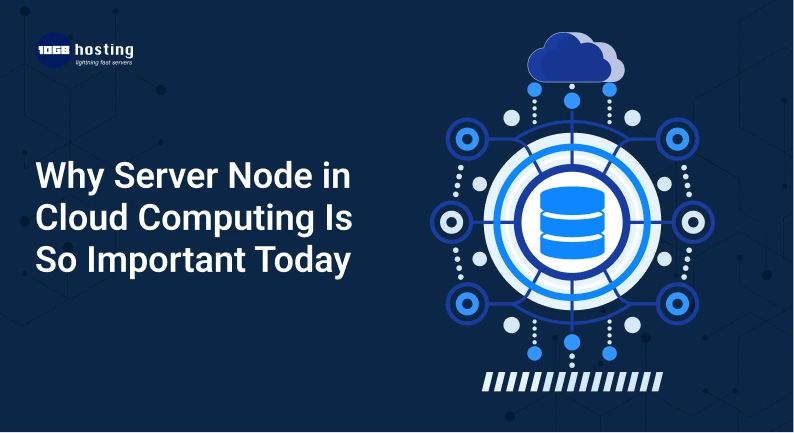
A server node in cloud computing is an individual server (physical or virtual) that forms part of a larger cloud infrastructure. Each node performs computing tasks such as processing requests, storing data, or running applications.
Think of cloud computing like a city:
- The cloud is the city
- The server nodes are individual buildings
- Each building has a role offices, storage facilities, control centers
Together, these server nodes make cloud services possible.
Cloud Server Node vs Traditional Server
| Traditional Server | Cloud Server Node |
|---|---|
| Single physical machine | Part of a distributed system |
| Limited scalability | Easily scalable |
| Higher downtime risk | High availability |
| Manual maintenance | Automated management |
In modern cloud environments, server nodes work together rather than operating in isolation.
How Cloud Computing Server Nodes Work
Step-by-Step: What Happens When You Access a Cloud App?
Let’s break it down into simple steps:
- User Request
You open a website or app hosted in the cloud. - Load Balancer Routes the Request
A load balancer sends your request to the most suitable cloud server node. - Server Node Processes the Task
The node processes data, runs application logic, or fetches stored content. - Data Sync Across Nodes
Information is synchronized across multiple nodes to ensure consistency. - Response Delivered Instantly
You see the result fast, seamless, and reliable.
This entire process happens in milliseconds, thanks to well-optimized cloud computing server nodes.
Types of Server Nodes in Cloud Computing
Not all server nodes serve the same purpose. Here are the most common types:
1. Compute Nodes
- Handle application processing
- Run virtual machines or containers
- Common in web apps, APIs, and SaaS platforms
2. Storage Nodes
- Store structured and unstructured data
- Used in cloud storage, backups, and databases
3. Network Nodes
- Manage data flow between nodes
- Handle routing, firewalls, and security rules
4. Control Nodes
- Manage orchestration and monitoring
- Common in Kubernetes and private cloud setups
Each type plays a critical role in maintaining performance and reliability.
Why Server Node in Cloud Computing Is So Important Today
1. Scalability Without Limits
One of the biggest reasons cloud server nodes matter is scalability.
Instead of upgrading a single server, cloud platforms:
- Add new server nodes instantly
- Distribute workloads automatically
- Scale up or down based on demand
Real-world example:
An eCommerce website during a festive sale can scale from 5 server nodes to 500 in minutes without downtime.
2. High Availability and Uptime
Modern businesses cannot afford downtime.
Cloud computing server nodes ensure:
- Redundancy (multiple nodes do the same job)
- Automatic failover if one node fails
- Near 99.99% uptime
Scenario:
If one server node crashes, traffic is instantly routed to another node users never notice the issue.
3. Improved Performance and Speed
Performance improves because:
- Requests are served from the nearest server node
- Workloads are evenly distributed
- Bottlenecks are avoided
This is why global apps like streaming platforms or fintech services rely heavily on distributed cloud server nodes.
4. Cost Efficiency for Businesses
Instead of paying for one powerful server:
- Businesses pay only for what they use
- Idle resources are minimized
- Infrastructure costs become predictable
Cloud server nodes enable pay-as-you-go pricing models, which are ideal for startups and growing companies.
5. Better Security and Isolation
Each server node operates with:
- Access controls
- Encryption
- Network isolation
If one node is compromised, the rest of the cloud infrastructure remains secure. This distributed design significantly reduces risk.
Real-World Use Cases of Cloud Server Nodes
Case Study 1: SaaS Company Scaling Globally
A SaaS platform serving customers in Asia, Europe, and the US uses regional server nodes.
Result:
- Faster load times
- Localized data processing
- Compliance with regional regulations
Case Study 2: Fintech Application
A fintech app uses multiple cloud computing server nodes for:
- Transaction processing
- Data storage
- Fraud detection
If one node fails, transactions continue smoothly on other nodes ensuring trust and reliability.
Case Study 3: Media Streaming Platform
Streaming platforms rely on thousands of server nodes worldwide to:
- Stream content smoothly
- Reduce buffering
- Handle millions of users simultaneously
Key Benefits of Server Nodes in Cloud Computing
Quick Summary of Benefits
- Scalable infrastructure
- High availability
- Faster application performance
- Lower operational costs
- Improved fault tolerance
- Enhanced security
- Global accessibility
In short, server nodes make cloud computing practical, reliable, and future-ready.
How to Optimize the Use of Cloud Server Nodes (Actionable Tips)
Step 1: Choose the Right Node Type
Select compute, storage, or hybrid nodes based on workload needs.
Step 2: Use Load Balancing
Ensure traffic is evenly distributed across server nodes.
Step 3: Monitor Node Performance
Track CPU, memory, and network usage to prevent bottlenecks.
Step 4: Enable Auto-Scaling
Automatically add or remove nodes based on real-time demand.
Step 5: Plan for Redundancy
Always deploy applications across multiple server nodes.
These steps ensure maximum performance and reliability.
Common Challenges with Cloud Computing Server Nodes
While powerful, server nodes also come with challenges:
- Managing large-scale node clusters
- Monitoring node health
- Controlling cloud costs
- Ensuring data consistency across nodes
The good news? Modern cloud platforms offer automated tools to handle most of these challenges.
Future of Server Nodes in Cloud Computing
Server nodes are evolving rapidly with technologies like:
- Edge computing (nodes closer to users)
- Containerized workloads
- AI-driven node optimization
- Serverless architectures
In the future, cloud server nodes will become even smarter, faster, and more autonomous.
FAQs: Server Node in Cloud Computing
1. What is a server node in cloud computing?
A server node is an individual server that processes data, runs applications, or stores information within a cloud environment.
2. How many server nodes does a cloud need?
There’s no fixed number. It depends on workload, traffic, and scalability requirements.
3. Are cloud server nodes physical or virtual?
They can be both. Physical servers host multiple virtual server nodes.
4. What happens if a cloud server node fails?
Other nodes automatically take over, ensuring no downtime or data loss.
5. Is a server node the same as a VM?
Not exactly. A VM can run on a server node, but a node may host multiple VMs or containers.
Conclusion: Why Server Nodes Matter More Than Ever
In today’s digital-first world, speed, uptime, and scalability are non-negotiable. The server node in cloud computing is the foundation that makes all of this possible. Without cloud computing server nodes, modern apps, platforms, and services simply wouldn’t scale or perform the way users expect.
Whether you’re a startup, an enterprise, or a developer, understanding cloud server nodes helps you build smarter, faster, and more resilient systems.
Call to Action (CTA)
Ready to build or optimize your cloud infrastructure?
Explore scalable cloud solutions, learn more about modern cloud architectures, or contact a cloud expert today to design the right server node strategy for your business.