People want modern software systems to be fast, scalable, dependable, and safe all at the same time. As apps get more complicated, developers often have to ask themselves a very important question:
How can we run business logic, handle server-side operations, and keep performance up under severe load?
Java Method Server Architecture comes into play here.
If you’ve ever worked with big Java-based systems, especially corporate platforms, you’ve probably come across or used a Java method server in some way. This blog will explain what a Java method server is, how its architecture works, why it’s important in modern software systems, and how to develop or improve one for use in the real world.
This article is meant to help both beginners who want to learn the basics and experienced developers who want to make their Java method server run faster. It will give you clear information and useful tips.
Table of Contents
What is a server for Java methods?
A Java Method Server is a part of the server that runs Java methods in a safe, controlled, and scalable way. A method server centralises the execution of business logic instead of doing it all directly on a client or monolithic application layer.
To put it another way:
A Java method server is a backend engine that handles method calls, applies business rules, maintains resources, and sends results back to clients or services that ask for them.
Important Features of a Java Method Server
- Runs business logic written in Java
- Handles requests from clients or services to run methods
- Handles things like memory, threads, and database connections.
- Allows for scalability and concurrency
- Makes it easier to separate issues in application architecture
Java method servers are often used in business applications, microservices architectures, and platform-based systems when several parts need to use the same business logic.
Why Java Method Server Architecture is Important Today
Software systems today are no longer just simple, single-tier apps. They are:
- Spread out
- Based in the cloud
- Very concurrent
- Works with services from other companies
If you don’t have a clear Java method server design, your apps can quickly run into problems like:
- Not doing well
- Close coupling
- Hard to keep up with
- Weaknesses in security
An organised Java method server application helps groups:
- Scale well
- Keep your codebases tidy
- Use business logic again
- Make the system more reliable
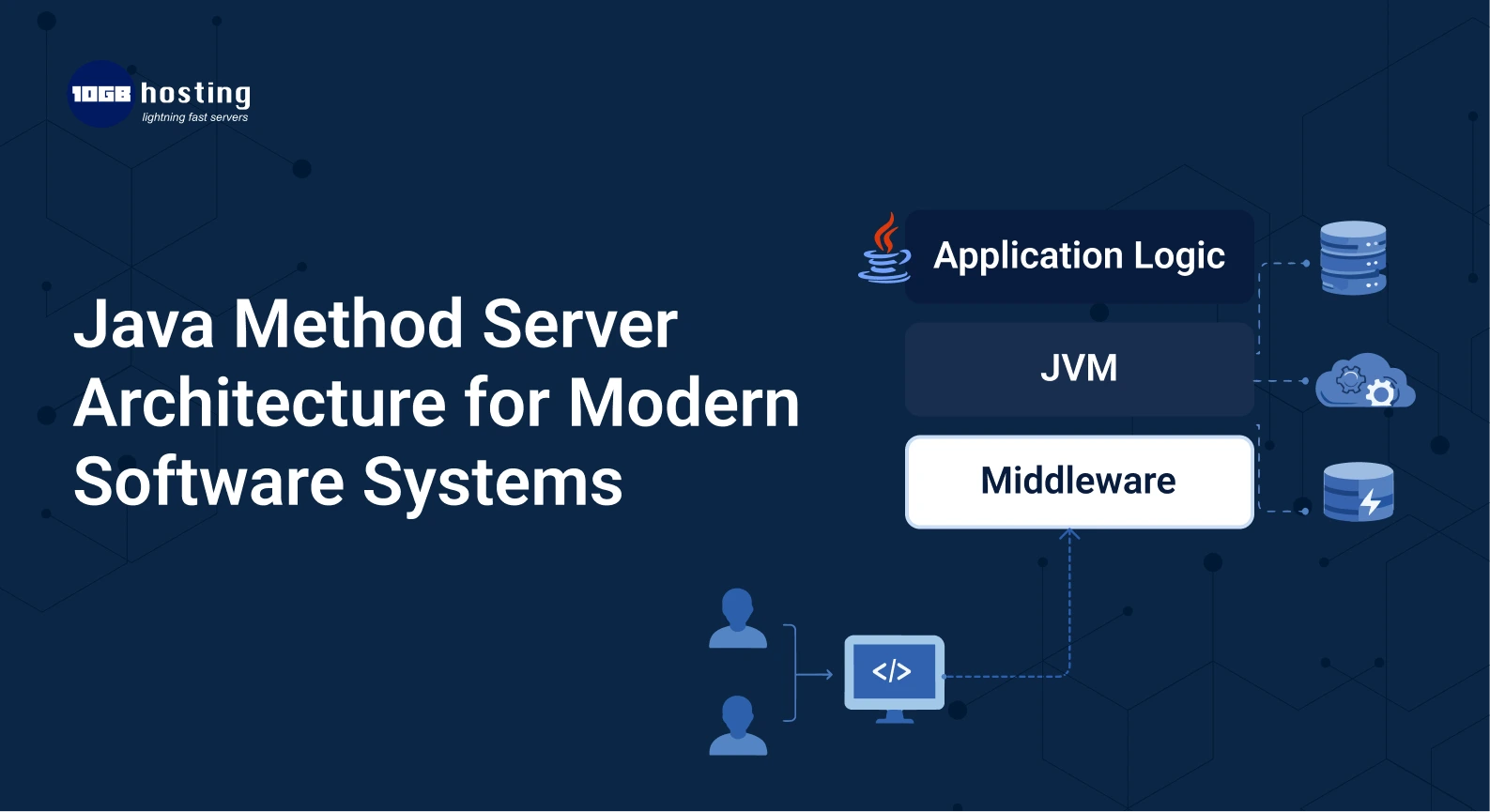
The main parts of the Java Method Server Architecture
The first step to understanding the architecture is to break it down into its logical parts.
1. Client Layer
This is where requests to run methods come from.
For example:
- Web apps
- Apps for mobile devices
- REST APIs
- Other small services
The client does not run business logic directly. Instead, it sends requests to the Java method server.
2. Layer for handling requests
This layer is the first thing you see when you connect to the Java method server.
Responsibilities include:
- Getting requests to call methods
- Checking the input parameters
- Verifying and giving permission to users
- Sending requests to the right mechanism
This layer frequently employs:
- Controllers for REST
- RPC methods
- Queues for messages
3. Engine for Running Methods
This is what makes the Java method server work.
Important roles:
- Runs Java methods
- Handles thread pools
- Takes care of exceptions
- Sets limits on transactions
A well-built execution engine makes sure that:
- A lot of throughput
- Very little latency
- Safe execution at the same time
4. The Business Logic Layer
This layer has the real Java methods that put business rules into action.
For example:
- Logic for processing orders
- User authentication processes
- Calculations for billing
- Data validation routines
The Java method server program stays modular and reusable by putting logic in one place.
5. The Layer for Accessing Data
Most Java method servers connect to databases or other systems outside of Java.
This layer takes care of:
- Queries for the database
- ORM frameworks like Hibernate and JPA
- Calls to external APIs
- Ways to store data
Here, proper abstraction makes it easier to maintain and speeds things up.
6. Infrastructure and the Runtime Environment
This covers everything that helps the method server work:
- Setting up the JVM
- Application server (WebLogic, Tomcat, JBoss)
- Containerisation (Kubernetes and Docker)
- Tools for monitoring and logging
How to Use Java Method Server Architecture (Step by Step)
To make things easier to understand, let’s go over a common flow.
Step 1: The client makes a request
A client application asks for a certain action, like
“Make a new user account”
You can send the request to the Java method server using HTTP, messaging, or another protocol.
Step 2: Check and verify the request
The server:
- Checks that input settings are correct
- Checks what users are allowed to do
- Records request metadata
Early rejection of invalid requests saves resources.
Step 3: Find the method
The server finds:
- What Java method has to be run
- Which class of service has the logic
This mapping is usually handled via settings or annotations.
Step 4: Running the Method
The execution engine:
- Gives out a thread
- Runs the Java method
- Handles transactions
- Deals with exclusions
This is where the performance of the Java method server becomes really important.
Step 5: Processing the Data
The method, if needed:
- Reads or writes information
- Calls services outside of itself
- Uses results that are already saved
Efficient data handling has a big effect on how quickly responses come back.
Step 6: The client gets a response back
The outcome is:
- Serialised (JSON, XML, etc.)
- Sent returned to the customer
- Logged for checking and fixing
Java Method Server in an E-Commerce Platform: A Real-World Example
Think of an online store with thousands of people using it at the same time.
Situation: Placing an Order
When someone makes an order:
1. The frontend asks the Java method server for something.
2. The server method:
- Checks the inventory
- figures out prices and discounts
- Handles payment logic
- Changes the state of the order
3. The client gets the result back.
Without a centralised Java method server app:
- There would be duplicating logic.
- It would be harder to keep up.
- When under load, there would be performance problems.
Advantages of the Java Method Server Architecture
1. Better performance and ability to grow
- Good thread management
- Support for load balancing
- Better use of resources
A well-tuned Java method server makes the system much more responsive.
2. Better Organisation of Code
- Clearly defined areas of concern
- Business logic that can be used again
- Testing and fixing bugs is easier
3. Better safety
- Authentication that is centralised
- Access to controlled methods
- Less area to assault
4. Upgrades and maintenance are easier
- Changes to business logic that don’t affect clients
- APIs with versions
- Fixing bugs faster
5. Works well with cloud and microservices
Java method servers work nicely with:
- Boxes
- Platforms for orchestration
- Pipelines for CI/CD
Best Ways to Build a Java Method Server
1. Change the settings for the JVM
- Change the size of the heap
- Use the right garbage collectors
- Keep an eye on how much RAM is being used
2. Use thread pools carefully
- Don’t make threads for each request
- Set pool sizes based on how much work there is to do
- Keep an eye on thread contention
3. Use caching wisely
- Store data that is accessed often in a cache.
- Use utilities such as Ehcache or Redis
- Don’t let old data problems happen
4. Keep an eye on and record everything
- Keep track of how long it takes to run a method
- Find out what is slowing down performance
- Use APM tools to see what’s going on
5. Plan for Failure
- Handling exceptions with grace
- Ways to try again
- Breakers for services outside of the network
Common Problems and How to Fix Them: Performance Bottlenecks
The answer is to profile, cache, and speed up slow methods.
- Close Coupling
- Use interfaces and dependency injection as a solution.
- Limits on scalability
Solution: Stateless design and horizontal scaling.
Frequently Asked Questions About Java Method Server Architecture
1. What does a Java method server do?
In enterprise Java apps, a Java method server is used to run business logic in one place, manage server-side methods, and make the apps run faster and more easily.
2. What does a Java method server do to make things run faster?
By improving how threads are managed, cutting down on logic duplication, leveraging caching, and managing requests at the same time in a smart way.
3. Is the Java method server architecture good for microservices?
Yes, Java method servers are good for microservices if they are made to be stateless and able to grow on their own.
4. What are some tools that people often use with Java method servers?
Some common tools are Spring Boot, Hibernate, Docker, Kubernetes, and monitoring tools like New Relic or Prometheus.
5. Is it possible for Java method servers to run on the cloud?
Of course. Most modern Java method server apps run in the cloud and are packaged in containers.
Final Thoughts: Why You Should Put Money into Java Method Server Architecture
Java method server architecture is a tried-and-true way to construct strong, high-performance applications as software systems get bigger and more complicated. It lets teams centralise logic, make things easier to manage, and give users a better experience.
If you’re constructing or updating a Java-based system, spending time planning or optimising your Java method server can pay you in a big way in the long term.
Are you ready to move on?
- Look into contemporary Java frameworks for building method servers.
- Check the performance of your present Java method server
- Follow our blog for additional in-depth guides on Java architecture and business development.
Need help from an expert or have questions? Get in touch with us today so we can work together to build scalable Java solutions.