
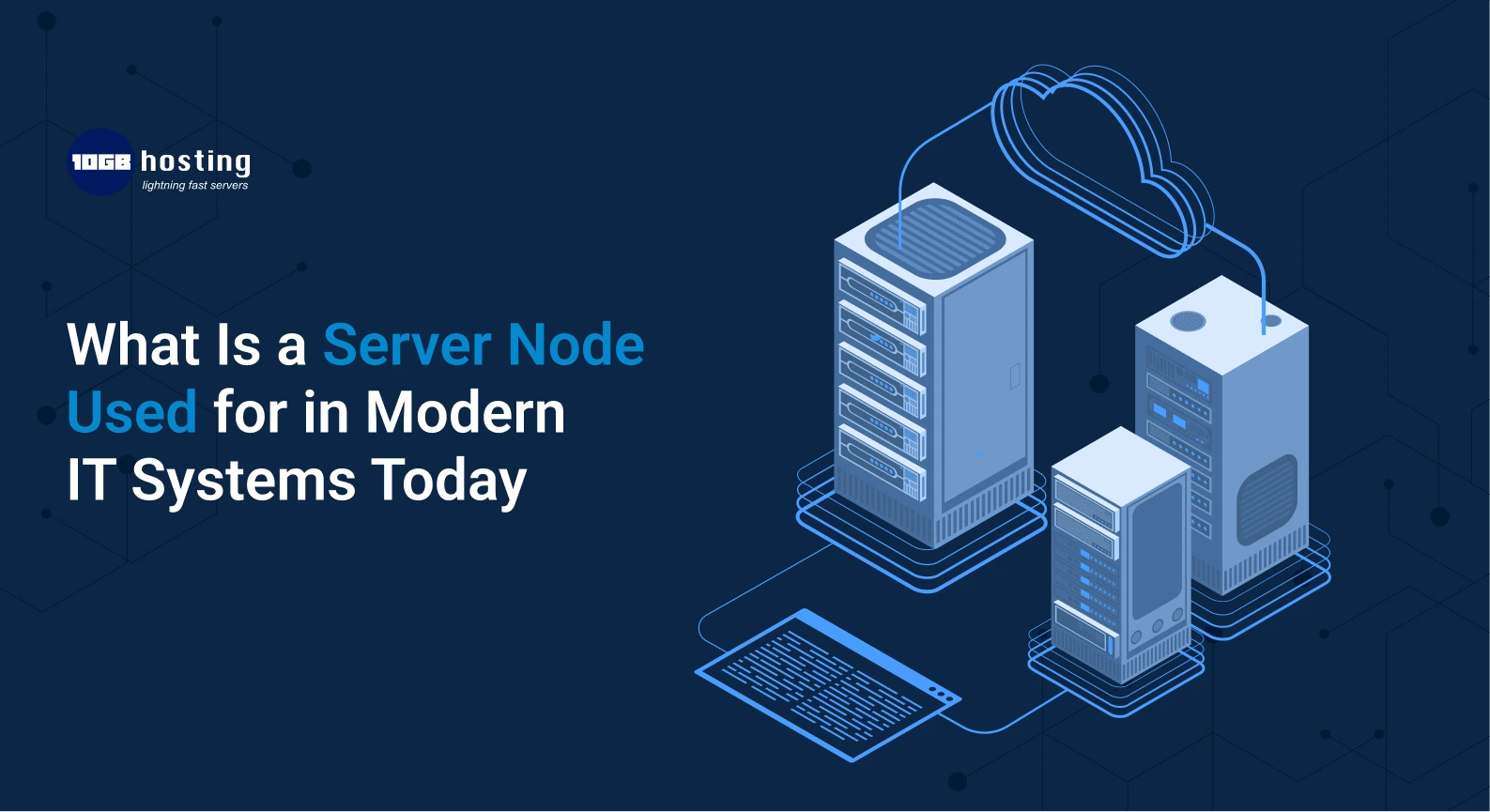
There is an invisible network of machines working together to make every website load quickly, every mobile app work in real time, and every cloud-based service function smoothly. Most people never see this infrastructure, yet it powers almost everything we do online. This often leads people to ask what is a server node and why it plays such a critical role, as the server node is one of the most essential components of this hidden digital ecosystem.
You’re in the right place if you’ve ever wondered what a server node does, how it’s different from a typical server, or why current IT systems need it.
This blog explains the subject in a style that is easy for beginners to understand, but it also gives specialists useful information from the actual world. You’ll know what a server node is, how it works, where it’s utilised, and why it’s so important in today’s IT world by the end.
Table of Contents
What is a node on a server? (A Simple and Clear Explanation)
A server node is a single computer that is connected to a network and does a specific job, including processing requests, storing data, or running programs.
In short:
- A node is any piece of hardware that is part of a network.
- A server node is a node that gives services to other users or systems.
Each server node functions on its own, but most of the time it collaborates with other nodes to make a bigger system.
Simple Example
Think about a corporation that delivers packages:
- The IT system for the company is its network.
- Each warehouse is a server node.
- Data = packages
Each warehouse takes care of its own deliveries, but together they do a great job of serving the whole area.
How a server node works in networking
A server node is an active part of a network since it responds to requests and shares resources. Server nodes are built for speed, uptime, and dependability, which is different from end-user devices.
Common Features of a Server Node
- Power for processing (CPU)
- A lot of memory (RAM)
- Storage, whether it’s local or on a network
- Connecting to the network
- Ability to talk to other nodes
Server nodes often run all the time, sometimes for years at a time
Difference Between Server and Node (Explained Simply)
One of the most common questions is the difference between a server and a node. While the terms are related, they’re not identical.
Key Differences
| Factor | Server | Node |
| Meaning | A system that provides services | Any device connected to a network |
| Role | Always serves data or resources | May serve or consume resources |
| Scope | Specific function | Broad category |
| Example | Web server, mail server | Server, printer, router, PC |
- A server node is a server and a node at the same time.
- Not all nodes are servers.
What does a server node do in modern IT systems?
Server nodes are important for modern IT systems because they can manage heavy workloads quickly and easily. Let’s look at the most common and crucial ways they are used.
1. Handling Requests from Users
Server nodes handle millions of requests every second from all around the internet.
For example:
- Opening web pages
- Filling out forms online
- Running search queries
- Managing login verification
To make things faster and more reliable, duties are spread out across several server nodes instead of just one machine doing all the work.
2. Hosting websites and apps
All of the websites and apps you use need server nodes to work.
How It Works:
- A person asks for something
- It goes to a server node
- The request is being worked on
- The answer is delivered back to the user.
Clusters of server nodes are used by high-traffic platforms to make sure that performance stays the same even when there is a lot of traffic.
3. The infrastructure for cloud computing
Server nodes are the building blocks of cloud systems.
Why They Are Important in the Cloud:
- Virtual machines run on physical server nodes.
- Resources are shared and given forth in real time.
- Adding or removing nodes is how scaling works.
Cloud providers run huge data centres with thousands of server nodes that are all connected to each other.
4. Distributing Traffic and Balancing the Load
Server nodes help make sure that incoming traffic is spread out equally across a system.
Pros:
- Stops overload
- Makes response time better
- Keeps the service available
For instance, when one node gets busy, traffic is instantly sent to another node that is free.
5. Managing and storing data
A lot of people utilize server nodes to store and manage data.
Common Uses:
- Hosting a database
- Systems for storing files
- Solutions for backup and recovery
In distributed storage systems, data is replicated to several server nodes to safeguard it against failures.
6. Microservices and the design of modern apps
Microservices are commonly used to build apps today. With microservices, each feature operates on its own.
What Server Nodes Do:
- Each service runs on its own node.
- APIs let nodes talk to each other.
- Failures stay separate
This design makes things more flexible, faster, and better at what they do.
7. Content Delivery Networks (CDNs)
Server nodes all over the world are very important to CDNs.
What They Do:
- Keep copies of content in the cache
- Serve data from the node that is closest
- Lower the load on the main servers
This is why films, pictures, and websites load rapidly no matter where the user is.
8. Blockchain and Systems That Are Spread Out
Server nodes keep the network working in decentralised systems.
What Server Nodes Are Responsible For:
- Check transactions
- Copies of the store ledger
- Talk to other peer nodes
These nodes ensure that dispersed networks are open, safe, and able to handle errors.
How Server Nodes Work Together in Steps
This is a simple flow of how server nodes work together:
- A user makes a request
- A load balancer picks a server node.
- The node handles the request
- If needed, data is pulled from another node.
- The user gets the results back.
This teamwork happens in milliseconds, so the user experience is smooth.
Why Server Nodes Are Important in the IT World Today
Server nodes are more than simply technical parts; they are also strategic assets.
Main Advantages
1. The ability to grow
Adding new server nodes makes systems grow quickly.
2. High Availability
If one node goes down, the others keep working.
3. Better Performance
Multiple nodes share the work.
4. Lowering costs
In cloud systems, resources are used well, especially.
5. Being able to change
Server nodes can handle a wide range of workloads and topologies.
Example from the Real World: Streaming Service
Think about a service that lets you stream videos:
- Web server nodes take care of letting users in.
- Video is streamed by media server nodes.
- Database nodes keep track of what users like
- Cache nodes cut down on the need to get the same data again and again.
When millions of people join in at the same time, more server nodes turn on automatically to handle the load.
Types of Server Nodes That Are Common
Different server nodes do different things:
- Web Server Node: Sends web content
- Application Node: Runs the business logic
- Database Node: Handles structured data
- Storage Node: Keeps backups and files safe
- Compute Node: Does tasks that need a lot of power
They all work together to make a full IT ecosystem.
Commonly Asked Questions (FAQs)
1. What does a server node mean in plain English?
A server node is a computer that is connected to a network and offers services like data storage or processing.
2. Is it possible for a server node to be virtual?
Yes. Server nodes might be real computers or virtual servers that run on cloud infrastructure.
3. Do only big companies use server nodes?
No. Server nodes can be used by small enterprises, new businesses, and even personal projects through shared or cloud hosting.
4. How many server nodes does a system need?
It relies on the amount of traffic, the needs for performance, and the architecture of the system.
5. What happens if one of the server nodes goes down?
In modern systems, additional nodes step in to keep the service running.
Why it’s important to know about server nodes
If you want to learn about cloud computing, manage a website, or create scalable infrastructure, knowing what a server node is used for is a great way to start.
Server nodes quietly run modern digital life, working all the time to maintain systems quick, dependable, and scalable.
Final Thoughts and a Call to Action
Server nodes are the most important parts of modern IT systems. They make today’s technology possible by making cloud platforms, mobile apps, databases, and distributed networks operate.
Want to know more about servers, hosting options, or IT infrastructure that can grow with your business?
Check out our detailed tutorials, sign up for updates, or get in touch with us to find the best server setup for you.