When people hear about your business, your website is often the first place they will go. If your website looks old, takes a long time to load, is difficult to use, or doesn’t clearly explain what you do, visitors may leave before ever contacting you or making a purchase.
That is why finding the right website designer is more than just finding someone who can make a good looking website. You need a professional that understands your business goals, target audience, branding, SEO, mobile usability, and customer journey.
Whether you’re a small business, online shop, professional service company or a growing startup, the right website can help you build trust and generate more leads.
This guide will show you how to choose the right website designer, what questions to ask, what mistakes to watch out for and how to make sure your website investment supports long term business growth.
Table of Contents
What is a website designer in ?
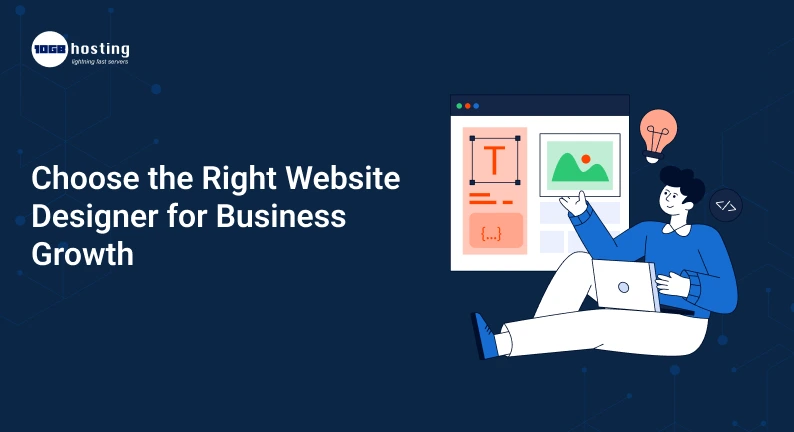
A website designer is a professional who designs and develops the visual look, layout, structure and user experience of a website. A website designer may also help with website development, responsive design, SEO, content structure, branding and ongoing website improvements, depending on their skills and services.
It’s not enough to simply put text and images on separate pages. A good designer thinks about how visitors will interact with your website and what you want them to do.
For example, a business website may have visitors:
- Company Contact
- Send us a contact form
- Quote me.
- Make an appointment
- Purchase of product
- Subscribe to newsletter
- Download a resource
- Begin a WhatsApp chat
A professional website designer designs the website with these goals in mind, not just on the basis of looks alone.
Why The Right Website Designer Is Important
Your Web site can be one of your most important business assets. But its value depends very much on how well it is designed and built.
A good web designer can help you create a website that:
- Leaves a strong first impression
- Builds trust with leads
- Works great on mobile devices
- Info easy to find
- Search engine optimisation assistance
- Generates more leads
- Improves the customer experience
- Clearly communicates your brand
- Supports future business scaling
Consider two companies that offer the same service. Company A’s website is slow, navigation is confusing, images are dated, and there’s no clear call-to-action. Company B has a clean, mobile optimised website with well defined services, customer reviews, easy navigation and easy inquiry form.
Both companies may be offering great services, but Company B is more likely to be trusted by visitors.
This is why selecting the right website designer should be considered a business decision and not merely a design decision.
Website Designer vs Website Builder | What’s the difference?
Many business owners mistakenly confuse hiring a website designer with using a website builder.
A website builder is a platform that allows you to build a website using templates, drag-and-drop tools, and pre-built features. It’s great for beginners and for companies with simple website needs.
Whereas a website designer can design a website more according to your business needs.
Looking for the best free website builder? There are plenty of affordable or free options. These can be great for testing an idea, building a simple personal website or getting started on a budget.
However, as your business grows, you might require more customisation, enhanced branding, advanced functionality, technical support, and superior SEO capabilities.
When to Use a Website Builder
If you’re looking for a website builder, then:
- You have very little money
- You need a basic website
- You want to make the website yourself
- Your business has simple needs
- You’re testing a new business idea
When to hire a website designer?
When should you choose to hire a professional?
- Your website is vital for lead generation.
- You want a unique design.
- You want branding that looks professional
- You want custom functionality
- Your website needs an SEO-friendly architecture
- You sell products or services on the web
- You want professional support that’s here to stay.
The right tool for you will depend on your business goals, budget, technical skills, and long-term plans.
Choosing the Right Website Designer
Selecting the right professional can be confusing because many designers provide the same services. Here are some steps that will help you compare the options better.
1. First Define Your Website Goals
Before you hire a website designer you need to know what you want your website to do.
Ask yourself:
- Need more leads? We got you!
- Do I want to sell products on-line?
- Are more phone calls needed?
- Do I want clients to book appointments?
- Do I need to present my portfolio?
- Do I want to establish my credibility online?
- Want to boost your search engine visibility?
A local dentist may need appointment bookings, an e-commerce company may need product pages, payment integration, filters, and customer accounts.
Your objectives will help you find a designer with the appropriate experience.
2. View Their Portfolio
A portfolio says a lot more than a sales pitch.
Review the designer’s past works and consider:
- Is the design contemporary?
- Are the sites easy to navigate?
- Do they work well on cell phones?
- Yes, there are different sectors.
- Do the websites look custom or are they built off a template?
- Is there a clear call to action?
- Waren die Informationen leicht verständlich?
Don’t just select a designer because one site on their portfolio looks nice. Look for consistency and evidence that they solve different business problems.
3. Search for Relevant Industry Experience
Industry experience can be a plus, but it should not be the sole deciding factor.
If they’ve worked with businesses similar to yours, they’ll already know what your customers expect and what your website needs.
For example, a real estate business may require:
- listings Real estate
- Filter and search
- Leadforms
- Position data
- Agent profiles
- Call or Whatsapp button
The restaurant may need:
- Menu pages
- Reservations on-line
- Where you shall be
- Opening times
- Food photography
- Internet ordering
Ask potential designers whether they have built sites that include the features you need for your business.
4. Check Their SEO Knowledge
If you have a beautiful website but aren’t ranking in search results, it may not be providing the business value you expect.
Your website designer should be familiar with the fundamentals of SEO including:
- Responsiveness on mobile
- Site speed
- Simple website structure
- Search Engine Friendly URL’s
- Headings structure
- Image optimisation
- Internal links
- Meta data
- Crawlability
- User experience
You don’t have to have your web designer be a complete SEO expert. But they should know how design and development decisions can impact search visibility.
5. Ensure They Build for Mobile
There are many people who surf the web on their smartphones. So your website needs to work properly on different screen sizes.
Check if:
- Easy-to-read text
- Buttons are easy to press
- Images scale properly
- Navigation for smaller screens
- The forms are easy to complete
- Quick page loads
- Important information is seen without scrolling too far
A responsive website not only provides a better experience but also works with your SEO strategy.
6. Enquire About Website Speed
Your slow-loading website can frustrate your visitors and impact your conversions.
Ask the web designer how they are going to improve performance.
They should know how to do things such as:
- Image compression
- Fast code
- Browser cache
- Hosting Optimised
- deferred loading
- Limit unnecessary plugins
- Testing for performance
“The website will be fast.” This is a vague promise and is unacceptable. Ask how performance will be measured and improved.
7. Know their prices
Website Design Prices Website design prices can vary widely based on the complexity of the project.
A simple website might only need a few pages, but a large business website can require dozens of pages, integrations, custom functionality and ongoing maintenance.
Get a clear breakdown of:
- Development costs
- Costs of development
- Hosting costs
- Domain fees
- Cost of software or plug-in
- Cost of content production
- Search Engine Optimisation (SEO) Services
- Maintenance costs
- Upgrade fees in the future
Don’t just go for the cheapest option. If you need to make major changes on the website later, a low initial price can be costly.
8. Enquire Content
Content and design go together.
A good website requires more than pretty graphics. It requires clear messaging explaining:
- What your business does
- Who You Serve
- Why customers should choose you
- What products/services do you provide
- How customers would contact you
Ask if the designer will do content writing or work with your existing content.
If they don’t do content services, you may want a different copywriter.
9. Talk About Maintenance and Support
You shouldn’t just create a website and leave it to collect dust.
You might also need to monitor software updates, security patches, content updates, backups, and technical issues.
Before you hire a designer, ask:
- Do you do maintenance?
- How long does it take you to respond to tech issues?
- Who is The Updater?
- Do I have my website backed up?
- Yes, you can make changes to the website yourself.
- What happens if I need more pages later?
Problems can be fixed after the website is live with clear answers.
10. Testimonials and Review Testimonials
Reviews can provide you with insight into what it is really like to work with a designer.
Look for comments on:
- Communications
- Dependability
- Keeping to deadlines
- Work quality
- Problem solving
- Support technical
- After launch service
Don’t just look at star ratings. Read the real comments to get a feel for the customer experience.
Questions to Ask Before You Hire A Web Designer
Before signing a contract ask these questions:
- How many websites have you built?
- Are you experienced with businesses like mine?
- Can I see examples of related work?
- What would you recommend and why?
- Will my site be mobile-friendly?
- How do you do SEO?
- How can I make my website faster?
- What’s included in the project price?
- How long will it take?
- Who owns the website and its content when it’s done?
- Can I update the website myself?
- Are you maintaining post launch?
The answers will help you know if the designer is interested in your business needs or just trying to sell a package.
Common Mistakes to Avoid When Choosing a Web Designer
Even experienced business owners can make bad choices if they focus on the wrong things.
Purchasing Based Only on Price
Saving money is important, but the cheapest designer may not deliver the quality, functionality or support your business requires.
Looking Good Already
Looks aren’t everything, your site also needs usability, performance, SEO, strong messaging and conversion focused elements.
Not Mobile Design Checking
Always check old websites on desktop and smartphones.
Communications bypass
If a designer is hard to communicate with before the project begins, it can make the process even harder later on.
Not making ownership clear
When the project is completed, be sure to understand who owns the domain, website files, content, graphics and other assets.
Disregarding Future Growth
Give your website some room to grow. You might even want to add new services, products, landing pages, blogs, integrations, or marketing campaigns in the future.
Real World Example A Small Business Web Site
Think of a small home renovation business that relied mostly on referrals.
The company decides to invest in an actual website.
Instead of just creating a five page website, the designer creates the website according to the company’s goals.
The new website will include:
- Service-specific pages
- Project images
- Customer reviews
- Location-based content
- Quote inquiry forms
- Click to call buttons
- Responsive navigation
- Explicit Calls to action
Now customers can find the company, learn about its services, check out previous work and get a quote before having to call.
The lesson is simple: a good website should support the customer’s decision making process.
Advantages of Selecting the Appropriate Web Designer
There are a few long term benefits for opting for the right professional.
Improved Brand Image
A website can project professionalism and make your business look more credible.
Superior Quality Leads
Clear service pages, strong calls-to-action, and easy to use forms make it easier for interested visitors to contact you.
Better user experience
This way, visitors can easily find what they want rather than getting frustrated with confusing navigation.
Set the stage for better SEO
A well-structured website provides a more solid technical and content foundation for your SEO strategy.
Future Growth Made Easier
A well designed website can be adapted to new products, services, landing pages, integrations and marketing campaigns.
Time Saver
Focus on running your business and stop trying to learn design, development, SEO, and technical maintenance yourself.
What are the qualities of a good website designer?
The best website designer is not necessarily the one with the most impressive portfolio or the cheapest price.
Find someone with:
- Design abilities
- Technological insight
- Business understanding
- SEO awareness
- Communications skills
- Problem solving skills.
- Reliability
- Support after launch
Most importantly they should ask you questions about your business before trying to offer a solution.
If a designer immediately recommends a package without knowing what you’re looking to accomplish, who your audience is, what your competitors do, and what you need for your website, you might want to look elsewhere.
Concluding Thoughts
The right website designer can make a real difference to the way your customers see your business and how much your website helps you grow.
A professional website should be more than just attractive. It should communicate your value, build trust, offer a seamless user experience, generate leads and give your business a solid footing in digital marketing.
Define Your Goals – Whether you are comparing a professional designer vs the best free website builder, looking for a website builder for small business, or want a fully customised website. Then compare pricing, communication, ongoing support, experience, SEO knowledge, and portfolios.
The right designer should feel like a partner in growing your business, not just someone you hire to build a few web pages.
FAQ
1. How to choose the right web designer?
Set your website goals, look at portfolios, ask about experience in your field, SEO and mobile design, compare price and ask about ongoing support. Pick someone who understands your business, not just someone who can make a pretty design.
2. What is the cost of a web designer?
Cost factors include the number of pages, the complexity of the design, functionality, content needs, integrations and ongoing services. Get a detailed quote so you know exactly what you are getting before you start the project.
3. Is a website designer better than a free website builder?
Depends what you need. A free website builder is handy for beginners and for simple websites. You’ll typically want to hire a professional website designer when you need custom design, advanced functionality, stronger branding, SEO support or a website that is built around specific business goals.
4. What questions should I ask a website designer before hiring them?
Ask about their portfolio, experience, pricing, timeline, SEO strategy, mobile responsiveness, website platform, maintenance services, ownership of website assets, and post-launch support.
5. Why Your Business Needs a Responsive Website Design
Responsive design means a website will function correctly on smartphones, tablets, laptops and desktop computers. It enhances usability and helps to make sure that customers can access your business information no matter what device they use.
Want to Build a Better Business Web Site?
Your website can be one of the most powerful tools to attract customers, build credibility and support long term growth. Find the right website designer who understands your goals and can build a fast, user-friendly, professional website.
Define your website goals, compare qualified designers, look at their work and choose a partner who can help grow your business online.